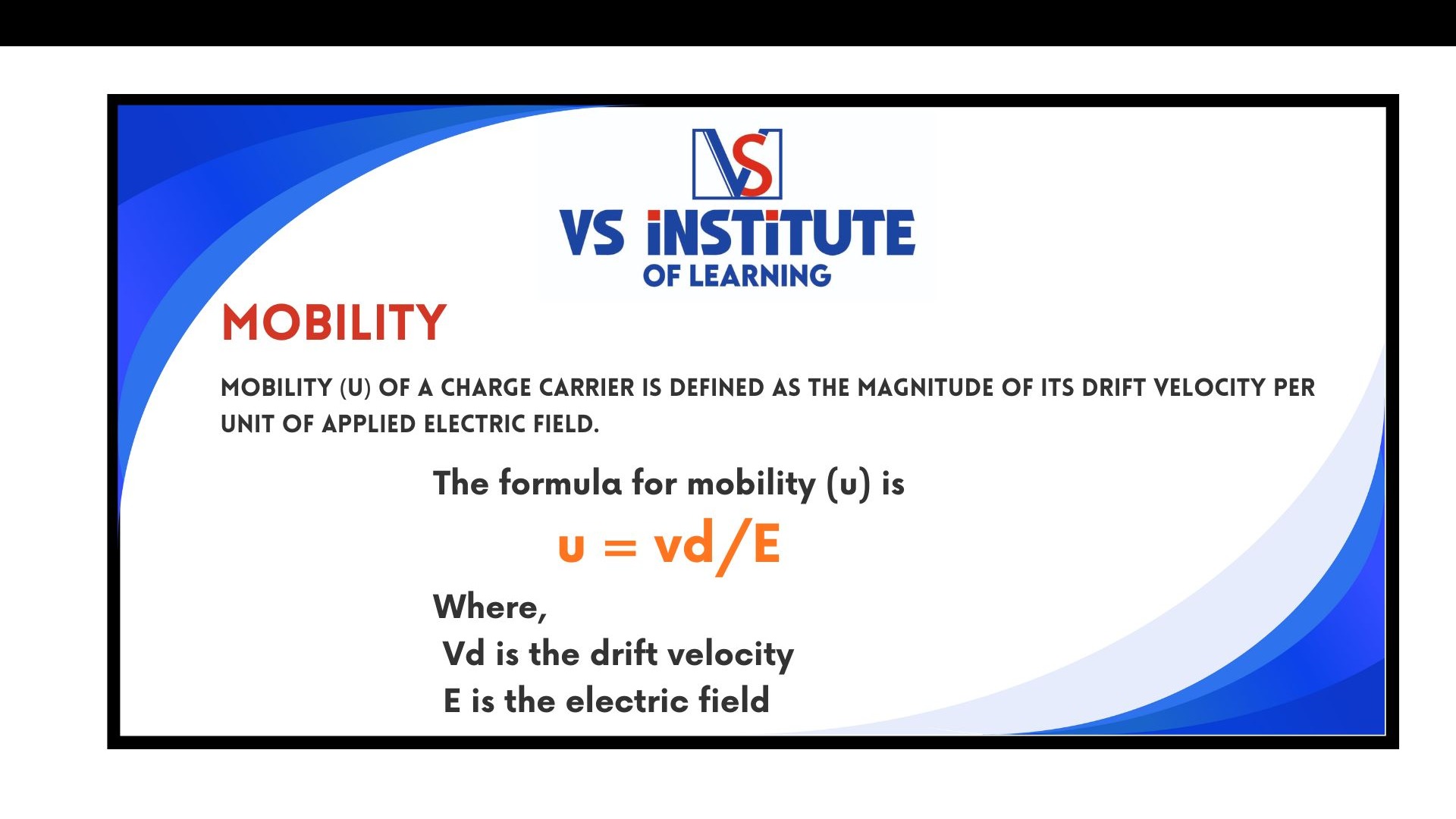
Mobility of a charge carrier (electron or hole) is the drift velocity acquired per unit electric field applied to the conductor.
When an electric field is applied, free charge carriers (electrons in metals, ions in electrolytes, electrons/holes in semiconductors) get a net drift velocity. That drift velocity depends on how “free” or “easy” it is for carriers to move — and that’s what mobility measures.
The concept ties into conductivity (how well a material conducts electricity). For example, in conductors or semiconductors:
𝜎 = 𝑛𝑒𝜇
where
𝑛 = density of charge carriers,
𝑒 = charge per carrier, and μ = mobility. So higher mobility → for same carrier density and charge → higher conductivity.
Also, mobility depends on material properties (nature of material, how often carriers collide with atoms/impurities — which affects their “relaxation time”) and on conditions like temperature. More collisions → lower mobility, etc.
Symbol : 𝜇
Formula
𝜇 = 𝑣𝑑/𝐸
Where,
𝑣d = drift velocity of the charge carrier
𝐸 = applied electric field